Tag: crash reporting

GBH: “As driving-related casualties mount, what would make Massachusetts roads safer?”

GBH: “As driving-related casualties mount, what would make Massachusetts roads safer?”

GBH: “As driving-related casualties mount, what would make Massachusetts roads safer?

Those grim numbers are the backdrop for a new push by the city of Boston to make its streets safer by deploying speed bumps, redesigning problem intersections, and revamping the use of traffic signals. Could Boston’s plan serve as a model for other communities? And what could state government be doing to decrease fatalities? Adam Reilly discusses with Brendan Kearney, the deputy director of WalkMassachusetts, and Stacy Thompson, the executive director of Livable Streets.

Segment initially aired June 2, 2023

WalkMassachusetts presents at BARI Conference 2023

WalkMassachusetts presents at BARI Conference 2023

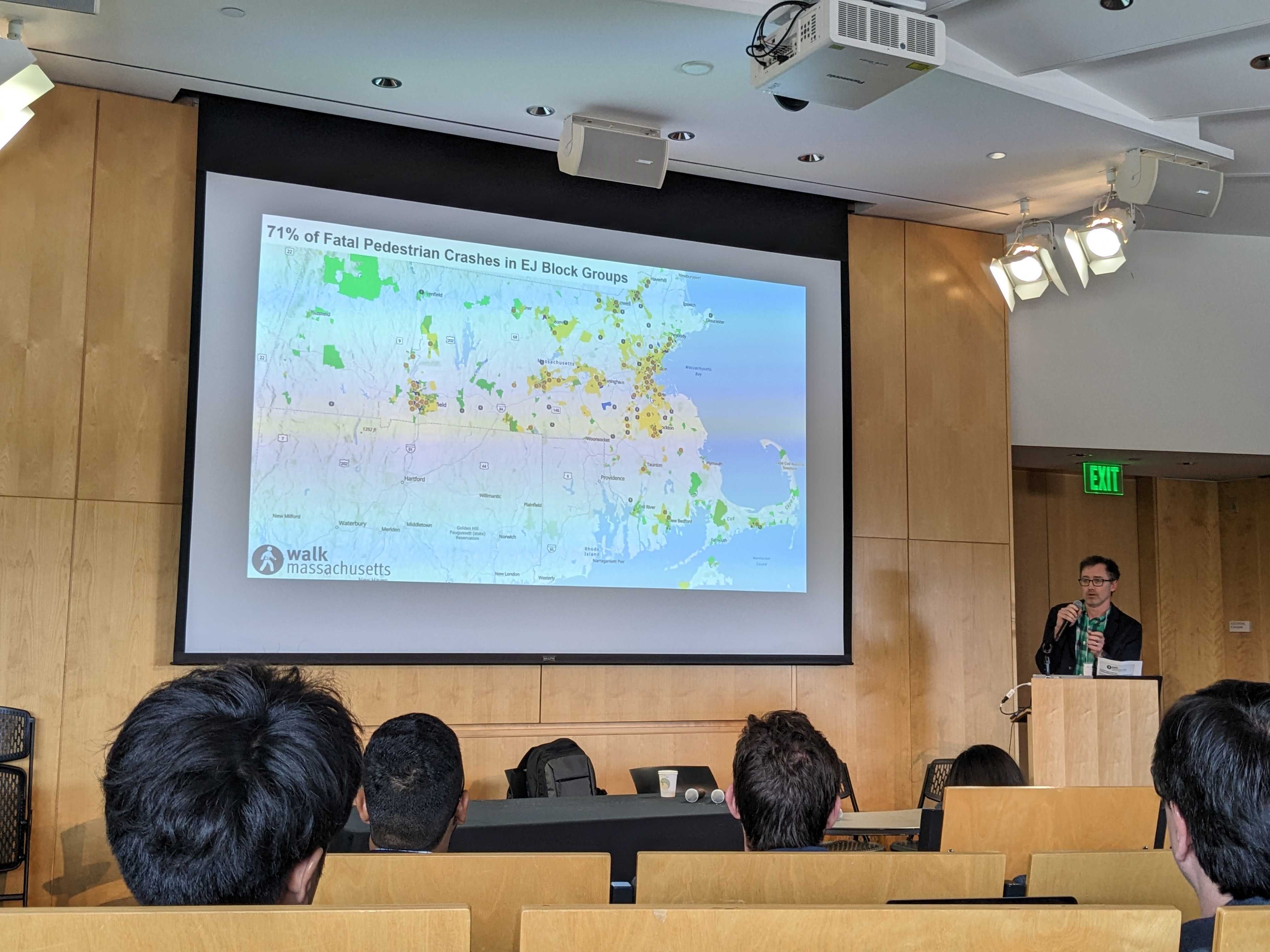
Last Friday, WalkMassachusetts’ Deputy Director of Advocacy Brendan Kearney presented at the Boston Area Research Initiative (BARI) Conference 2023: Greater Boston’s Annual Insight-to-Impact Summit. The BARI Conference aims to be a unique forum for community leaders, practitioners, researchers, and policymakers to share how they advance data-driven research and policy in Greater Boston—and how we could do even more through collective action. The conference took place at the MIT Media Lab in Cambridge, an inspiring space to listen to impactful talks, network with others, and imagine innovative ways to collect and utilize data.
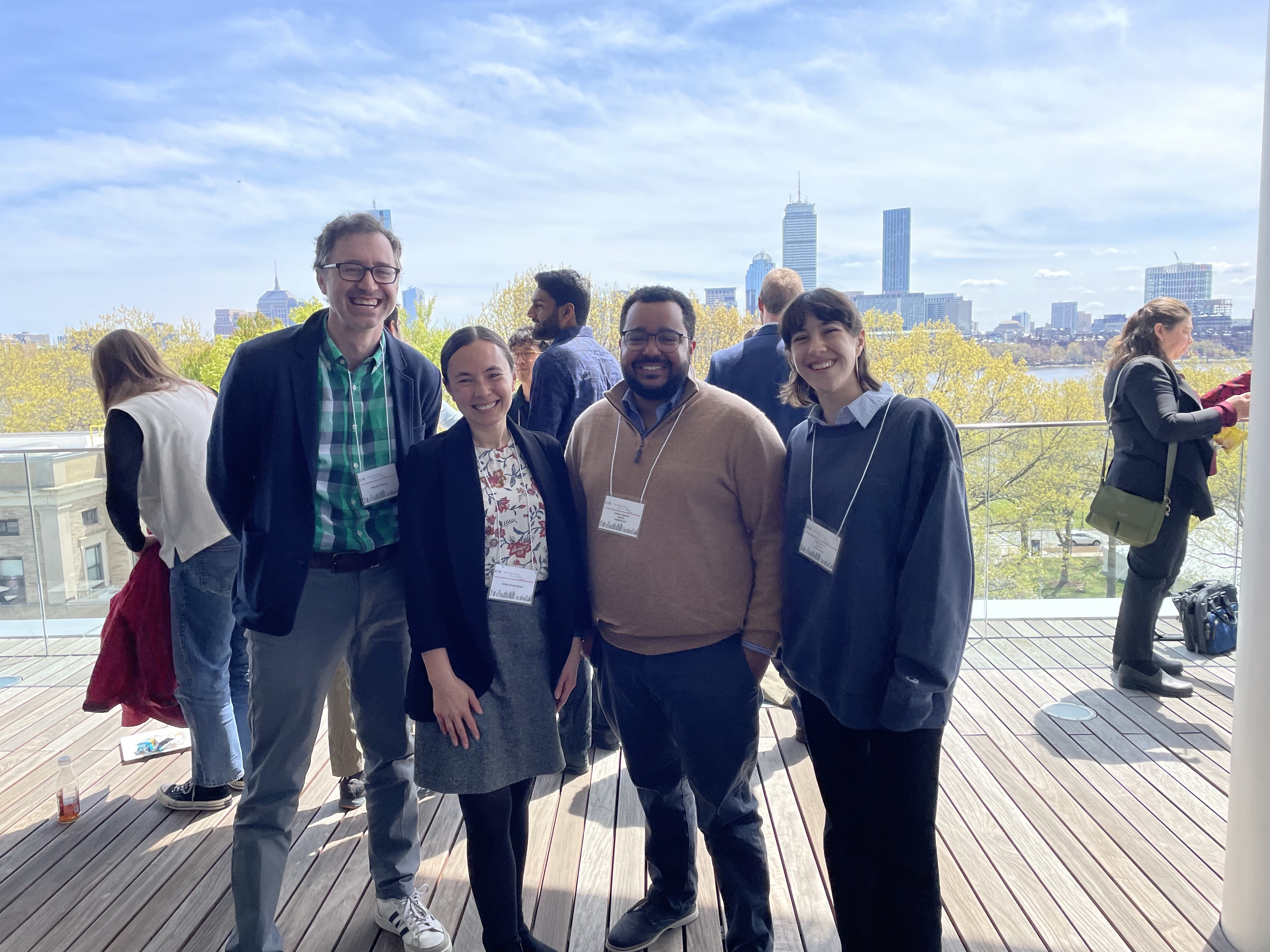
 
Pictured right to left: Ava Dimond, Iolando Spinola, Althea Wong-Achorn, Brendan Kearney.

Brendan was one of four speakers on the topic of “Redesigning Transportation.” Brendan and Bonnie Polin of MassDOT co-authored the talk, entitled “MassDOT’s Impact Crash Portal (And How WalkMassachusetts And Other Advocates Use It).” MassDOT created the  IMPACT (Interactive Mapping Portal for Analysis & Crash Tracking) portal to make crash data that is reported by police departments more readily available to the public. IMPACT allows you to look at data through pre-built reports or conduct your own self-driven analysis; dashboards allow for interactive analysis & data exploration. The talks were moderated by Liz Williams, Ph.D., Director of Data and Policy at MassDOT‘s Office of Transportation Planning, while Jarred Johnson, Executive Director at TransitMatters, acted as provocateur asking follow up questions of the speakers before opening it up to the audience. 

WalkMassachusetts has used IMPACT to help communities identify high risk locations & encourage residents to push for safety changes. Using IMPACT, we published a report last March examining spatial and demographic patterns in fatal pedestrian crashes statewide. 

We would like to thank Bonnie and her team at MassDOT for making this data accessible to the public and for seeking feedback to continually improve the portal. Thank you to Liz and Jarred for a thought-provoking discussion following the talks, and to BARI for inviting WalkMassachusetts to discuss our experience with IMPACT. 

Fatal Pedestrian Crashes in MA (2021) Report News Coverage

Fatal Pedestrian Crashes in MA (2021) Report News Coverage

We list all media clips on our website, but on this post we consolidated some of the media coverage for the Fatal Pedestrian Crashes in MA (2021) Report. Please let us know if we missed any others that you’ve seen and we can try and keep this current.


Report Overview

Every life lost on Massachusetts’ roads is tragic. At WalkBoston, we advocate for the most vulnerable road users – people walking. In 2021, at least 75 pedestrians lost their lives in traffic crashes in Massachusetts, accounting for 18 percent of all lives lost in traffic crashes.

Findings:

  • Of the 351 cities and towns in Massachusetts, 47 had a fatal pedestrian crash in 2021. Over half (40 of 75) of the deaths happened in 12 municipalities.
  • Older adults were hit and killed at a higher rate than those in other age groups: 36% of fatal crash victims were over the age of 65. In Massachusetts, only 17% of the population is over 65.  1  
  • Over half of Massachusetts’ fatal pedestrian crashes (50.67%) occurred on streets with speed limits of 30 to 35 MPH. These are neighborhood streets and main streets where more people are walking.
  • Roughly 65% of the people killed while walking were on roads owned by a city or town, while approximately 35% were walking on roads owned by a state agency (MassDOT or MassDCR).

Read the press release | Read the full report


Coverage

One Minute, One Slide: Language defines a story

One Minute, One Slide: Language defines a story

Below is a “One Minute, One Slide” presentation shared by a member of the WalkBoston staff.
Text provided is as prepared for this year’s annual event on March 18, 2019.

Brendan Kearney

Language matters when talking about crashes: A recent study shared at the TRB (Transportation Research Board) Conference titled “Editorial Patterns in Bicyclist and Pedestrian Crash Reporting” examined ways that media coverage of crashes could influence public perception, looking at word choice and agency.

An example from a crash in Boston: You wouldn’t know someone was driving this truck by the initial news report, since “a city-owned truck struck a pedestrian.”

We (politely) reached out to the reporter and station on Twitter, and asked them to clarify that a person driving was behind the wheel in this crash. The news station was responsive, & made changes to the story.

Just as road design influences behavior, media coverage & local reporting influences public perception.

About 40,000 people in the United States die as a result of car crashes each year. This isn’t just about drivers hitting people walking, it includes people both in and outside cars – roughly 350 people die in crashes each year in Massachusetts alone, while many thousands more are injured. We need to reduce illegal speeding to help prevent and/or reduce the severity of these crashes. So a big THANK YOU to all the reporters and news organizations that are willing to take a look at how they are presenting crashes. Local reporting helps shine a light on common-sense ways we can make our streets safer for people: fixing the way our roads are designed.